 Ελληνικά
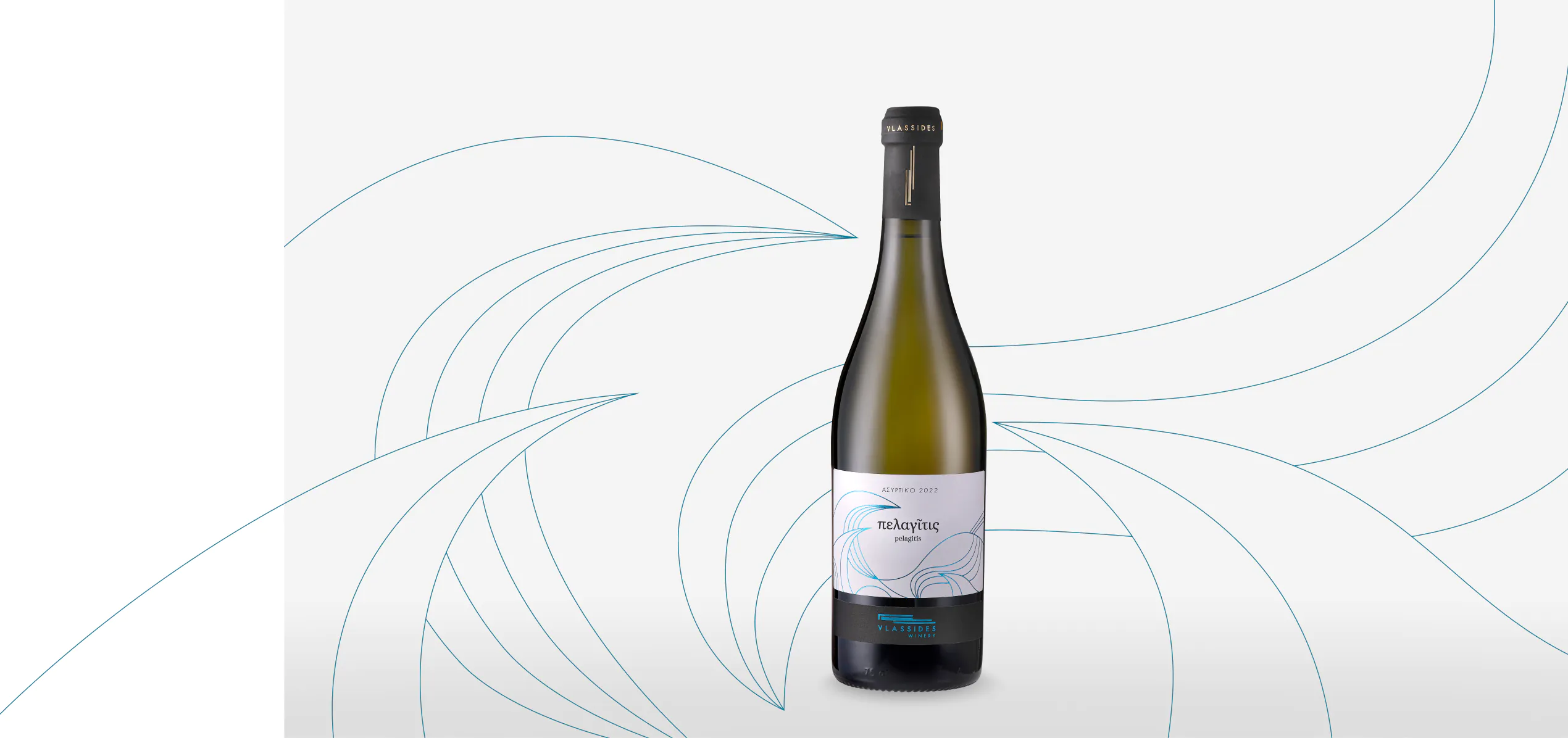
Pelagitis highlights Assyrtiko in an island environment closely related to its place of origin.
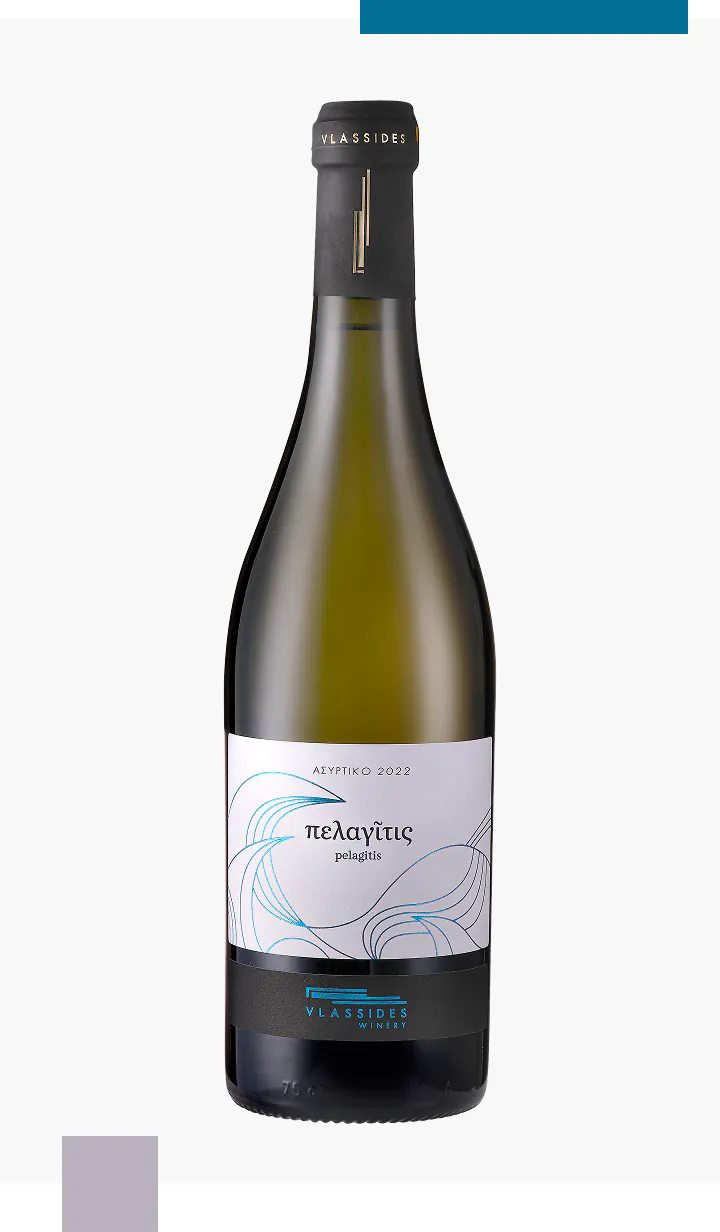
Pelagitis [meaning pelagic/of the open sea in Ancient Greek] is the name given to our white wine made from Assyrtiko, inspired by the variety’s birthplace, the volcanic Greek island of Santorini. The variety retains its dynamic and multifaceted character both in Santorini and in Cyprus, under kindred island conditions.
In Cyprus, the island that shares the same sea as its homeland, Assyrtiko finds a new environment of expression while maintaining consistency and a clear sense of identity.
The Cypriot limestone soils lend structure, tension and minerality to Assyrtiko, allowing us to craft a mature white wine with depth and balance. The wine remains in bottle for two years before release and evolves gracefully over time.
The naturally high acidity of the variety forms the foundation of the wine’s structure and is a defining element of its ageing potential, resulting in a white wine of clarity, intensity and long development.
It shows additional ageing potential approaching a decade.
Serving temperature: 10–12°C, to best reveal its structure and complexity.

PELAGITIS

Varieties:
100% Assyrtiko
Soil Composition:
Sandy Clay Loam
Vinification:
Harvest takes place from early to mid-September. Immediately after harvesting, the grapes are transferred to a temperature-controlled environment to preserve their freshness. Following cooling, the grape clusters are pressed whole and intact, using gentle pressure to ensure careful juice extraction.
The must is then transferred to stainless steel tanks, where alcoholic fermentation takes place. A portion of the wine ferments in French oak barrels of 300 litres, contributing to the development of structure and complexity.
The wine remains in contact with its fine lees for ten months prior to bottling. Before bottling, blending is carried out between the wine aged in stainless steel tanks and the portion matured in barrel. In the 2022 vintage, the final composition consisted of 90% stainless steel–fermented wine and 10% barrel-fermented wine.
The wine subsequently undergoes a further two years of bottle ageing prior to release.
Organoleptic Characteristics:
- Appearance: Pale lemon colour with green highlights, clean and youthful.
- Aromatic Characteristics (Nose): Medium to medium(+) intensity, clean and expressive. Aromas of citrus fruits, including lemon and lime, are combined with notes of green apple and white peach. Subtle mineral character and gentle secondary notes of light oak toasting add complexity.
- Palate (Flavour and Texture): Dry, with high acidity, medium body and medium alcohol. The palate is dominated by flavours of lemon, lime and green apple, with a characteristic stony note. Oak influence is subtle and well integrated, contributing texture without masking the fruit character.
- Finish: Medium(+) in length, clean and mineral-driven.
- Ageing Potential: The wine shows capacity for further development over a period of up to 10 years.
Harvest Information 2022:
| Ethanol: | 13,9% Vol |
| pH: | 2,98 |
| Total Acidity (H2SO4): |
4,4 g/l |
| Reducing Sugars: | 1 g/l |
| Rainfall: October until July |
795 mm |
| Harvest Temperatures (Μ.Α.) Lowest: Highest: |
15°C – (9/2022) 29°C – (9/2022) |
2022 Harvest:
The 2022 harvest will be remembered mainly for the very high acidity and low pH presented in the vineyard by almost all international and local grape varieties, white and red, with the sole exception of Xynisteri, which will remain in our memory for its amazing year. But, let’s analyze more thoroughly the factors that determined the harvest of the year 2022.
The total amount of rainfall in our area for the period of October 2021 – September 2022, was approximately 795mm of rain. The month with the most rainfall was December 2021 (317mm of rain), followed by January 2022 (254mm of rain), both months accounting for over 70% of the total rainfall. The last rainfall took place on March 25th, 2022. This resulted in intense abiotic stress during the ripening period due to the lack of water from the end of March. At the same time, this caused the almost excellent health of the plants, due to the absence of favorable conditions for the development of fungal infections.
The winter of 2022 was mildly cold with the average minimum and maximum temperatures being lower than in 2021, throughout the vegetative period. This was a fact that also justified the partial delay of ripening of the winery’s international and indigenous varieties.
The phenological stages in the 2022 harvest were structured as follows:
- Expansion – first 10 days of April
- Flowering – second 10-day period of May
- Veraison – mid-July
- Harvest – beginning of August to mid-October
The low temperatures of July and August of 2022, resulted in slow technological ripening for our white varieties. The white wines of Vlassides Winery for the 2022 harvest are characterized by relatively low alcohol levels, high acidity, low pH and aromatic typicality of each variety, especially for Sauvignon blanc and Assyrtiko.
For Xynisteri, it was a super productive year and this was probably due to the ideal climatic conditions that prevailed during the flowering period. Nevertheless, this variety continues to surprise us with its multifaceted character, depending on the abiotic conditions (soil, climate, altitude, direction, etc.), the biotic environment and the adapted human activities around the vineyard. The expression in aromas and taste of the same variety in different sub-regions in Kilani, often differs noticeably and this gives us extra motive to experiment in the winemaking process every year. This is what we did this year as well.
In the red varieties, the low temperatures at the end of August and September, mainly during the evening hours, had a significant impact on the phenolic ripening of Giannoudi, Agiorgitiko, Cabernet Sauvignon and Merlot varieties. Having excellent quality in raw materials, all that remained to be done was to properly manage the extractions. The winery’s red wines for the 2022 vintage are characterized by a rich phenolic load, voluminous and oily mouthfeel. A big percentage of the 2022 red wines are already in French oak barrels and will remain for maturation for at least 12 months.